
National Lottery EuroMillions Jackpot

National Lottery EuroMillions Jackpot: The Complete Guide to the Draw, Its History, Record Jackpots and Biggest Winners
Few lottery prizes attract attention quite like the EuroMillions jackpot. When the top prize begins climbing beyond £50 million, £100 million or £150 million, EuroMillions stops feeling like an ordinary lottery draw and becomes a major event. When the jackpot approaches its maximum level, the potential prize can represent one of the largest sums of money available from any mainstream lottery accessible to UK players.
For British players, EuroMillions forms part of the National Lottery portfolio, but the game itself is much bigger than the UK. It is a multinational European lottery bringing together players across nine participating countries. That enormous combined player base is one of the reasons EuroMillions can generate jackpots far beyond those normally associated with domestic lottery games.
Since the first EuroMillions draw in 2004, the lottery has produced extraordinary winners, repeatedly broken jackpot records, changed its rules, expanded the number of weekly draws and gradually increased the maximum amount that can accumulate at the top of the prize structure.
Today, the maximum EuroMillions jackpot is €250 million, with the sterling equivalent changing according to exchange rates. During 2025 alone, the €250 million level was reached and won multiple times, demonstrating just how dramatically EuroMillions has evolved since its comparatively modest beginnings.
For anyone interested in the National Lottery EuroMillions jackpot, its history is almost as fascinating as the prizes themselves.
What Is EuroMillions?
EuroMillions is a multinational lottery currently played across nine European countries: the United Kingdom, France, Spain, Ireland, Austria, Belgium, Luxembourg, Portugal and Switzerland.
Players across those countries participate in the same main EuroMillions draw.
That international structure is fundamental to understanding why EuroMillions jackpots can become so large. Rather than depending entirely upon ticket sales within a single country, the game pools participation across several national lottery markets.
Millions of potential players can therefore contribute to a common prize fund.
EuroMillions has consequently developed into one of Europe’s biggest lottery games and has now passed the milestone of more than 1,000 draws.
For UK players, participation takes place through the National Lottery, while other participating countries operate EuroMillions through their respective authorised national lottery organisations.
When Did EuroMillions Start?
EuroMillions dates back to 2004.
The game launched in February 2004, with the first EuroMillions draw taking place on Friday 13 February 2004.
Initially, EuroMillions was considerably smaller than the multinational lottery we know today.
Only three countries participated:
France, Spain and the United Kingdom.
The first draw produced an immediate jackpot winner. A ticket holder from France won approximately €15 million, establishing the pattern of potentially enormous multinational prizes that would eventually define EuroMillions.
The lottery expanded rapidly.
On 8 October 2004, Austria, Belgium, Ireland, Luxembourg, Portugal and Switzerland joined the game.
EuroMillions had therefore grown from three participating countries to nine within its first year.
Those nine countries continue to form the core EuroMillions network.
The addition of millions more potential players was extremely important because greater participation allowed prize pools and jackpots to grow more rapidly.
EuroMillions was beginning its transformation from a new European lottery experiment into one of the world’s most recognisable jackpot games.
The First UK EuroMillions Jackpot Winner
British players did not have to wait long for the country’s first major EuroMillions success.
On 9 April 2004, Marion Richardson became the first UK EuroMillions jackpot winner, collecting approximately £16.7 million.
At the time, a prize approaching £17 million was enormous by British lottery standards.
It would eventually look relatively small compared with the extraordinary jackpots EuroMillions would produce during the following two decades.
UK EuroMillions winners would eventually collect prizes exceeding £50 million, £100 million, £150 million and ultimately £195 million.
How the EuroMillions Draw Works
Winning the EuroMillions jackpot requires matching five main numbers and two Lucky Stars.
The five main winning numbers are selected from numbers 1 to 50.
The two Lucky Stars are drawn separately.
Matching all seven produces the jackpot-winning combination.
There are numerous lower prize categories for players matching fewer numbers and Lucky Stars, meaning the jackpot is only the highest level of a much wider prize structure.
The existence of seven components to the jackpot combination helps explain why jackpot winners are relatively rare.
That rarity is also exactly what allows enormous rollover sequences to develop.
When nobody matches all five main numbers and both Lucky Stars, the jackpot can roll into the next draw.
As consecutive draws pass without a jackpot winner, the top prize can grow dramatically.
When Are EuroMillions Draws Held?
EuroMillions draws currently take place twice every week, on Tuesday and Friday evenings.
The draws are conducted at approximately 20:00 UK time, although anyone purchasing a ticket should always check the National Lottery’s current official sales deadline rather than assuming that tickets remain available until the draw itself.
Tuesday draws were not always part of EuroMillions.
For the early years of the game, EuroMillions was a Friday-only lottery.
That changed in May 2011, when the additional Tuesday draw was introduced.
This effectively doubled the regular number of EuroMillions draws.
Instead of approximately one jackpot opportunity each week, players now had two.
For the lottery itself, the change also meant jackpot cycles could develop considerably faster.
A jackpot can begin at its starting level on one draw and, following a sequence of rollovers, become an enormous nine-figure prize within a matter of weeks.
How Many EuroMillions Draws Are There Every Year?
With regular draws taking place every Tuesday and Friday, there are normally around 104 EuroMillions draws during a typical year, occasionally 105 depending upon how the calendar falls.
That means the game now produces roughly twice as many annual draws as it did during its original Friday-only format.
Over more than two decades, those draws have accumulated into a substantial historical archive.
EuroMillions has now held well over 1,000 draws.
Each draw becomes another entry in a history containing jackpot wins, rollovers, Superdraws, record prizes and occasionally extraordinary periods during which nobody manages to match the complete winning combination.
What Is the EuroMillions Jackpot?
The EuroMillions jackpot is the highest prize available in each draw.
To win it, a ticket must match all five main numbers and both Lucky Stars.
The jackpot begins from a predetermined minimum level and grows according to the game’s prize structure and ticket sales when it is not won.
The current starting jackpot is expressed in euros because EuroMillions operates internationally, while UK players see an equivalent value in pounds sterling.
The starting level is around €17 million, with its UK sterling value depending upon currency conversion.
That alone can produce a starting jackpot worth well over £10 million.
However, EuroMillions becomes particularly interesting when the jackpot begins rolling.
Why Does the EuroMillions Jackpot Become So Large?
The fundamental reason is simple: scale.
EuroMillions combines players from nine countries into the same jackpot game.
When millions of tickets are purchased across Europe, significant sums can flow into the prize structure.
If nobody wins the jackpot, the top prize can roll forward.
Another unsuccessful draw can push it higher again.
Then another.
A prolonged sequence of rollovers can transform an already substantial jackpot into a prize exceeding €100 million.
Continue that process and the jackpot can move towards €150 million, €200 million and ultimately the maximum permitted level.
This is why EuroMillions periodically produces jackpots that attract widespread media attention throughout Europe.
The EuroMillions Jackpot Cap
EuroMillions does not allow the jackpot to increase indefinitely.
A maximum jackpot, generally referred to as the jackpot cap, limits how high the top prize can grow.
The cap has changed several times throughout EuroMillions history.
This is one of the most important developments in understanding why modern jackpots are so much larger than those available during the game’s early years.
An important change occurred in 2009 when a maximum jackpot mechanism replaced the earlier rollover-limit system.
Later changes gradually increased the maximum amount.
In 2020, the cap increased to €200 million, with a mechanism allowing the maximum to increase further following qualifying capped jackpots.
The progression that followed created a remarkable sequence of records.
The cap moved from €200 million to €210 million.
Then to €220 million.
Then €230 million.
Then €240 million.
Finally it reached €250 million.
The €250 million level represents a maximum prize capable of translating into well over £200 million depending upon exchange rates.
The €200 Million EuroMillions Era
The introduction of the €200 million cap marked the beginning of a new period for EuroMillions.
A €200 million jackpot was reached in December 2020.
A French ticket holder subsequently won the enormous prize, which resulted in the maximum moving upwards to €210 million under the rules operating at the time.
EuroMillions had entered territory that would have seemed extraordinary when the game began in 2004.
But even €200 million would not remain the record for long.
The €210 Million Jackpot
In February 2021, EuroMillions reached the new €210 million maximum.
A ticket purchased in Switzerland won the jackpot.
That success pushed the potential future maximum higher again, to €220 million.
Only months later, that new record would also fall.
The €220 Million Jackpot
On 15 October 2021, a French ticket holder won an astonishing €220 million EuroMillions jackpot.
At that point it represented the largest EuroMillions jackpot ever awarded.
The record demonstrated how quickly the game’s jackpot ceiling had expanded.
A lottery whose first jackpot winner had collected €15 million in 2004 was now creating individual prizes approaching fifteen times that amount.
The Historic £195 Million UK EuroMillions Winner
One of the most important dates in British lottery history arrived on 19 July 2022.
A UK ticket holder won a EuroMillions jackpot worth approximately £195 million, corresponding to the €230 million maximum operating at the time.
The winner remained anonymous.
The prize became the largest EuroMillions jackpot ever won by a UK player, a National Lottery record that remains one of the defining moments in British lottery history.
It is difficult to put £195 million into ordinary financial terms.
This was not simply enough money to purchase a house, retire or travel indefinitely.
It represented generational wealth on a scale comparable with the fortunes of some extremely wealthy businesspeople and celebrities.
One lottery ticket had created one of Britain’s wealthiest private individuals overnight.
Joe and Jess Thwaite’s £184 Million EuroMillions Win
Only a few months before the £195 million record, another British couple had already rewritten the National Lottery record books.
Joe and Jess Thwaite, from Gloucestershire, won approximately £184 million on EuroMillions in May 2022.
Their jackpot briefly stood as Britain’s largest National Lottery win.
The remarkable part is how quickly their record was surpassed.
Just over two months later, the anonymous £195 million winner claimed an even larger EuroMillions jackpot.
The two prizes demonstrated how dramatically EuroMillions had changed the upper end of British lottery winnings.
A £100 million jackpot was no longer necessarily the ceiling.
EuroMillions was capable of producing prizes approaching £200 million.
Colin and Chris Weir
Long before the £184 million and £195 million jackpots, Colin and Chris Weir became two of Britain’s best-known EuroMillions winners.
The Scottish couple won approximately £161 million in 2011.
At the time, their jackpot was almost unimaginably large and became one of the most famous lottery wins in British history.
Their win helped establish EuroMillions as the National Lottery game associated with truly extraordinary jackpots.
Adrian and Gillian Bayford
Another celebrated British EuroMillions success followed in 2012 when Adrian and Gillian Bayford won approximately £148 million.
Their jackpot again demonstrated the enormous financial scale EuroMillions could reach even before the later jackpot-cap increases pushed potential prizes towards £200 million.
The Weirs and the Bayfords became part of an expanding group of British players whose EuroMillions prizes exceeded £100 million.
The National Lottery has stated that at least 19 UK EuroMillions players had won prizes of £100 million or more by its published 2025 winner information.
The €240 Million EuroMillions Record
Another major milestone arrived in December 2023.
EuroMillions reached its then maximum jackpot of €240 million.
On 8 December 2023, a single Austrian ticket holder matched the complete winning combination and collected the record prize.
The sterling equivalent was approximately £206 million, although the precise sterling comparison is inherently affected by exchange rates.
Following that record jackpot, the maximum EuroMillions cap moved to €250 million.
EuroMillions had now reached its present quarter-of-a-billion-euro era.
The €250 Million EuroMillions Jackpot
A €250 million lottery jackpot is an extraordinary concept.
It is a quarter of a billion euros.
Depending upon exchange rates, the sterling equivalent can comfortably exceed £200 million.
In 2025, EuroMillions finally reached this maximum level.
The first €250 million jackpot of the year was won by an Austrian online player on 28 March 2025.
The National Lottery’s draw archive recorded the UK sterling jackpot value for that draw at approximately £209.3 million.
The winning numbers were:
10, 21, 30, 42 and 45.
The Lucky Stars were 1 and 9.
It was a landmark moment.
EuroMillions had officially awarded the full €250 million jackpot.
Remarkably, it would not be the last €250 million jackpot of 2025.
The June 2025 €250 Million Jackpot
Another extraordinary rollover sequence developed during spring and early summer 2025.
The jackpot climbed through a succession of increasingly enormous values.
On 2 May it stood at approximately £82.9 million.
By 9 May it had passed £104 million.
By 16 May it was approximately £127.3 million.
On 23 May it had reached approximately £153.2 million.
On 30 May it stood at approximately £184.2 million.
By 3 June the jackpot had crossed £200 million.
On 6 June it reached approximately £210.8 million.
On 10 June it stood at approximately £211.9 million.
On 13 June the jackpot was approximately £212.6 million.
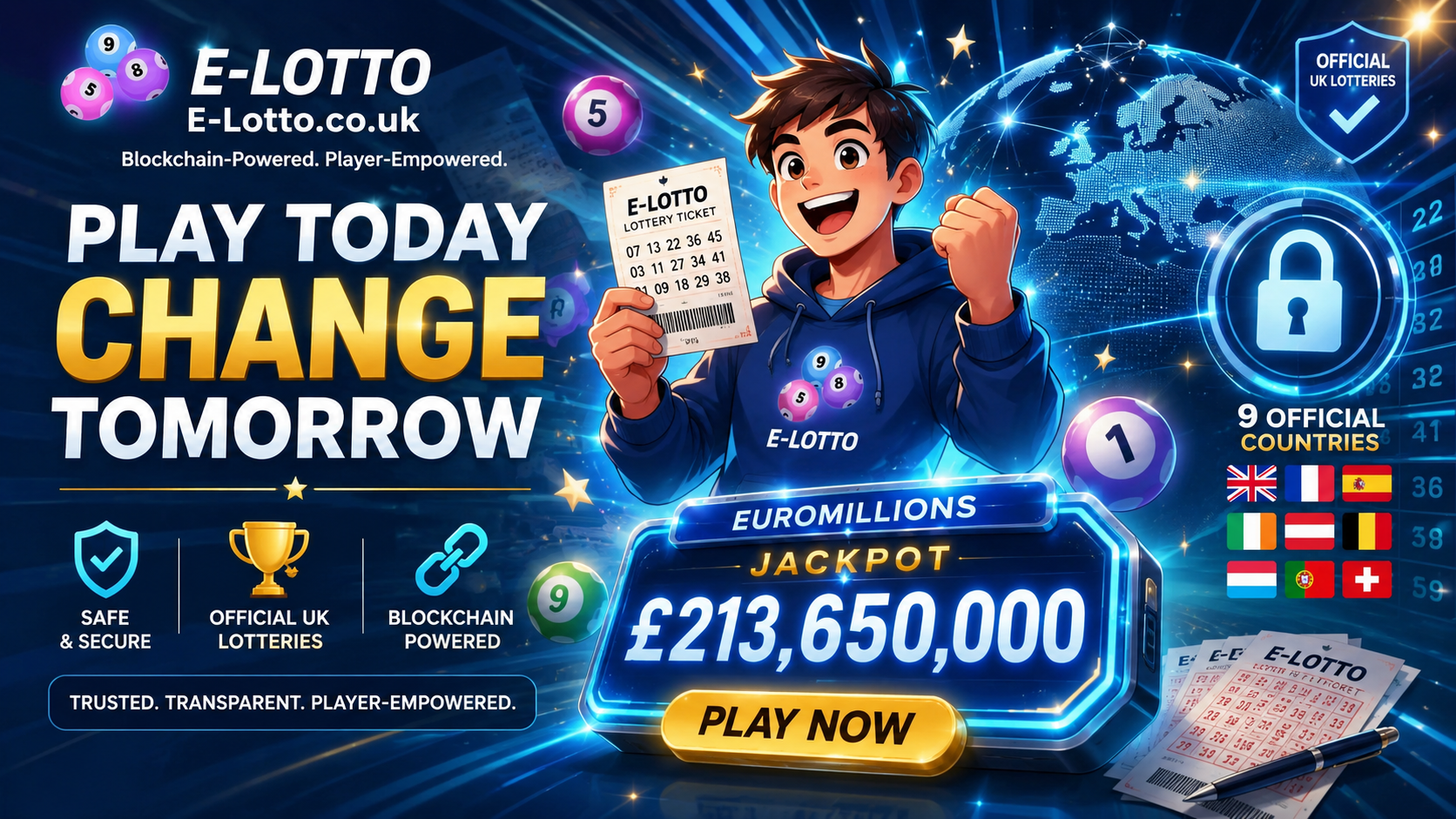
Then, on 17 June 2025, the jackpot was won at the €250 million maximum, with the National Lottery archive listing its UK equivalent at approximately £213.65 million.
The winning ticket was sold in Ireland.
The winning numbers were:
13, 22, 23, 44 and 49.
The Lucky Stars were 3 and 5.
The result created one of the biggest lottery winners in Irish history.
Another €250 Million Winner in August 2025
The €250 million ceiling appeared again remarkably quickly.
On 19 August 2025, a French ticket holder won another jackpot at the €250 million maximum.
The sterling value was approximately £216.1 million, making it one of the largest sterling-equivalent EuroMillions jackpots ever awarded.
The fact that multiple €250 million jackpots could appear within a single calendar year illustrated the enormous scale EuroMillions had reached.
Twenty years earlier, the lottery’s first winner had collected €15 million.
By 2025, individual jackpots were exceeding that original prize more than sixteen times over.
Why EuroMillions Jackpot Records in Pounds Can Look Different
British readers will often see EuroMillions records quoted differently depending upon whether the source uses euros or pounds.
This is because the official multinational jackpot is fundamentally denominated in euros, while UK players receive and see sterling equivalents.
Exchange rates change.
Consequently, two jackpots of exactly €250 million can have different sterling values depending upon the exchange rate when each draw occurs.
This explains why a later €250 million jackpot can be described as larger in pounds than an earlier €250 million jackpot even though both were identical in euro terms.
When comparing historical EuroMillions records, it is therefore important to distinguish between the largest euro jackpot and the largest sterling-equivalent jackpot.
Superdraws and Huge Guaranteed Jackpots
EuroMillions does not always need a long natural rollover sequence to produce a huge jackpot.
The lottery periodically stages Superdraws.
A Superdraw dramatically increases the jackpot to a predetermined guaranteed amount regardless of the size of the jackpot in the preceding draw.
Modern EuroMillions Superdraws can start at approximately €130 million or another specially announced level.
If nobody wins the Superdraw jackpot, the prize can continue rolling.
That creates the possibility of a €130 million starting point becoming €150 million, €180 million, €200 million or eventually €250 million.
Superdraws therefore act as accelerators within the EuroMillions jackpot system.
Instead of waiting through numerous ordinary rollovers to reach nine figures, the game can jump directly into enormous jackpot territory.
What Happened Before the Modern Jackpot Cap?
EuroMillions has not always operated under its present jackpot-cap rules.
During the early years, the game used a rollover-limit system.
In January 2006, an 11-rollover limit was introduced.
If the jackpot remained unwon through the relevant sequence, the money could eventually roll down into the next eligible prize category rather than continuing indefinitely.
One of the most fascinating examples occurred in November 2006.
After the jackpot reached the required limit and nobody matched the full winning combination, an enormous prize pool worth around £135 million was distributed among 20 players in the Match 5 plus 1 Lucky Star tier.
Seven of those winners were from the UK.
It remains an extraordinary chapter in EuroMillions history because the biggest beneficiaries were not jackpot winners in the traditional sense.
They were players one Lucky Star short of the complete jackpot combination.
Why Jackpot Rollovers Matter
Rollovers are the engine behind the EuroMillions phenomenon.
A starting jackpot is already enormous.
But a sequence of unsuccessful jackpot draws progressively changes the character of the game.
At £15 million or £20 million, EuroMillions offers a major lottery jackpot.
At £50 million, it becomes exceptional.
At £100 million, the prize enters genuine nine-figure territory.
At £150 million, the jackpot begins attracting much broader attention.
Above £200 million, EuroMillions reaches a level achieved by very few lottery games anywhere in the world.
Every rollover therefore adds another chapter to the jackpot cycle.
The question changes from simply whether somebody will win to how high the jackpot might climb before somebody finally does.
The Mathematics Behind Winning the EuroMillions Jackpot
The headline jackpot is enormous partly because winning it is extraordinarily difficult.
A player needs to correctly predict all five main numbers and both Lucky Stars.
There are millions upon millions of possible combinations.
That is precisely why enormous rollover sequences can occur even when vast numbers of tickets are purchased across Europe.
The lottery does not become easier to win simply because the jackpot becomes larger.
Every valid combination still faces the same underlying probability in that particular draw.
A £200 million jackpot may attract significantly more players than a £20 million jackpot, increasing the possibility that somebody somewhere holds the winning combination, but an individual line does not become inherently luckier because the jackpot has grown.
EuroMillions and UK Millionaire Maker
For UK players, EuroMillions has another important feature beyond the main European draw.
Eligible UK EuroMillions entries also participate in UK Millionaire Maker.
A unique Millionaire Maker code is generated for qualifying entries, with winning codes selected alongside EuroMillions.
Millionaire Maker was introduced in November 2009, guaranteeing major additional prizes specifically for UK players.
This means a UK player does not necessarily need to match the main EuroMillions numbers to become a millionaire.
A ticket that wins nothing substantial in the main draw can potentially contain a winning Millionaire Maker code.
The feature has created a steady stream of UK millionaires alongside the headline EuroMillions jackpot winners.
More Than Just the Jackpot
The enormous jackpot understandably receives most of the attention, but EuroMillions distributes money across numerous prize categories.
Millions of smaller prizes can be won.
The scale becomes particularly apparent during major draws.
For example, the National Lottery reported that the EuroMillions draw on 28 March 2025 created more than 1.4 million UK winners, sharing more than £7.2 million in cash prizes within the UK even though the record jackpot itself went to an Austrian ticket holder.
That distinction is important.
A EuroMillions draw does not consist of one jackpot winner and everyone else losing.
There can be enormous numbers of lower-tier winners across the participating countries.
The Importance of the Nine Participating Countries
EuroMillions is sometimes casually described as an EU lottery, but that description is misleading.
It is a multinational European lottery involving participating national lottery operators rather than a lottery operated by the European Union.
The participating countries are the United Kingdom, France, Spain, Ireland, Austria, Belgium, Luxembourg, Portugal and Switzerland.
The UK remains part of EuroMillions despite leaving the European Union.
Switzerland is another obvious demonstration that EU membership is not a requirement.
The structure is based on cooperation between participating lottery organisations.
How EuroMillions Has Changed Since 2004
Comparing today’s EuroMillions with the original 2004 game reveals how substantially it has evolved.
It began with three countries.
It expanded to nine.
It originally had one weekly Friday draw.
It now has Tuesday and Friday draws.
Its jackpot rules changed.
Its rollover rules changed.
Its jackpot cap increased repeatedly.
Additional national games such as UK Millionaire Maker were introduced.
Superdraws became an important part of the calendar.
Most importantly, the maximum jackpot increased to levels that would have seemed extraordinary during the lottery’s early years.
EuroMillions did not simply become more popular.
Its entire jackpot architecture evolved.
From €15 Million to €250 Million
Perhaps the simplest way to understand EuroMillions history is to compare its first jackpot with its modern maximum.
The first EuroMillions draw in February 2004 produced a French jackpot winner of approximately €15 million.
Today, the maximum jackpot is €250 million.
That means the modern maximum is more than sixteen times the size of the jackpot won in the inaugural draw.
Few statistics illustrate the transformation of EuroMillions more clearly.
Previous EuroMillions Winners
Thousands of people have won substantial EuroMillions prizes since 2004, while a much smaller group have become jackpot winners.
Some winners have chosen publicity.
Others have remained anonymous.
This means there can never be a complete public biography of every EuroMillions jackpot winner.
Lottery operators may confirm that a jackpot has been claimed without publishing the identity of the person or syndicate responsible.
That is particularly relevant in the UK, where major winners may generally choose whether they wish to participate in publicity.
As a result, EuroMillions history contains both famous named winners and enormous anonymous winners.
The anonymous UK winner of approximately £195 million in July 2022 is perhaps the most dramatic example.
The identity may be unknown publicly, but the jackpot remains the largest EuroMillions prize recorded for a UK ticket holder in National Lottery winner information.
Syndicates and Shared Jackpots
Not every EuroMillions jackpot necessarily goes to one individual.
A winning ticket can belong to a syndicate.
Multiple jackpot-winning tickets can also exist in the same draw.
When more than one ticket matches all five main numbers and both Lucky Stars, the available jackpot is divided between the jackpot-winning tickets according to the game’s rules.
This creates an important distinction between the advertised jackpot and the amount any individual winner ultimately receives.
A £100 million jackpot with one winning ticket can create a £100 million winner.
The same jackpot with two jackpot-winning tickets could result in the prize being divided.
EuroMillions is therefore capable of creating one enormous winner or several simultaneous multi-millionaires.
What Happens When the Jackpot Reaches Its Maximum?
Once the EuroMillions jackpot reaches the permitted cap, it cannot simply grow without limit.
Money that would otherwise continue increasing the jackpot is handled according to the prevailing EuroMillions prize-fund rules.
If the jackpot remains unwon while at the maximum, special capped-jackpot rules apply.
This prevents the headline prize from expanding indefinitely while ensuring prize money continues to be distributed through the game’s structure.
The exact rules have changed over EuroMillions history, which is why historical descriptions of rollover limits should not automatically be assumed to describe the current game.
Can EuroMillions Produce an Even Bigger Jackpot in the Future?
Under the present structure, €250 million represents the current maximum EuroMillions jackpot.
Whether that maximum remains permanent is another question.
History suggests that EuroMillions jackpot rules are capable of evolving.
The maximum has already progressed through €200 million, €210 million, €220 million, €230 million, €240 million and €250 million.
There is therefore historical precedent for increasing the jackpot ceiling.
However, players should never assume that a higher cap will be introduced unless officially announced by the participating lotteries.
For now, €250 million remains the key maximum figure.
EuroMillions in the Modern National Lottery
EuroMillions occupies a distinctive position within the UK’s National Lottery portfolio.
Lotto remains the classic British National Lottery draw.
Thunderball offers another familiar draw format.
Set For Life is built around long-term monthly payments rather than one enormous conventional jackpot.
EuroMillions occupies the extreme end of the spectrum.
Its defining feature is scale.
It is the National Lottery game capable of producing jackpots so large that the winner can instantly acquire wealth measured in hundreds of millions of pounds.
That makes EuroMillions fundamentally different from almost every other mainstream lottery available to UK players.
Checking Previous EuroMillions Draws
The historical EuroMillions archive has become substantial.
National Lottery draw history allows players to review previous results, including the date, jackpot amount, five main numbers, two Lucky Stars and UK Millionaire Maker information.
For researchers, lottery enthusiasts and anyone simply interested in previous results, this provides a fascinating chronological record of jackpot cycles.
A historical sequence can show a jackpot beginning at around £14 million and progressively moving through £20 million, £30 million, £50 million, £80 million and £100 million before eventually being won.
The 2025 archive provides particularly dramatic examples, including jackpot sequences climbing beyond £200 million.
Do Previous EuroMillions Numbers Predict Future Draws?
No historical result can guarantee or reliably predict the numbers that will appear in a future EuroMillions draw.
Previous winning numbers can be analysed statistically.
Players can examine frequently drawn numbers, less frequently drawn numbers, consecutive numbers, odd and even combinations and numerous other historical patterns.
That may be interesting from a statistical perspective.
It does not mean a number is “due” to appear.
Independent random draws do not owe players a particular result because a number has not appeared recently.
Similarly, a number appearing several times over a short period does not necessarily make it more likely to appear again.
Historical EuroMillions results describe what has happened.
They do not reveal what must happen next.
Why EuroMillions Winners Fascinate the Public
There is something uniquely compelling about an enormous lottery winner.
Most people can imagine what they might do with £100,000.
They can probably imagine what they would do with £1 million.
Even £10 million remains understandable: a large house, financial security, travel, investments and perhaps early retirement.
A £150 million or £200 million EuroMillions jackpot is different.
At that point, the winner is dealing with institutional-scale wealth.
Property portfolios, investment structures, trusts, professional financial management, philanthropy and intergenerational estate planning can suddenly become relevant.
That scale is why the biggest EuroMillions winners frequently become national news stories.
The fascinating question is no longer simply what somebody would buy.
It is how somebody adapts when an ordinary life is suddenly accompanied by a nine-figure fortune.
The Biggest UK EuroMillions Winner
For UK lottery history, the anonymous £195 million EuroMillions jackpot won on 19 July 2022 remains one of the defining records.
The National Lottery identifies it as the biggest EuroMillions jackpot won by a UK player.
It surpassed Joe and Jess Thwaite’s approximately £184 million win from May of the same year.
Those two jackpots alone demonstrate how extraordinary 2022 was for British EuroMillions players.
Within a matter of months, the record for Britain’s biggest lottery fortune was broken twice.
The Biggest EuroMillions Jackpots Overall
Looking across Europe rather than only the UK changes the record picture.
The maximum jackpot has now reached €250 million, and that amount has been won.
Austria produced a €250 million winner in March 2025.
Ireland produced another €250 million winner in June 2025.
France produced another in August 2025.
Because the euro amount was identical but exchange rates differed, their sterling equivalents were not identical.
This is why the phrase “biggest ever EuroMillions winner” needs context.
It can mean the biggest nominal euro jackpot.
It can mean the largest sterling equivalent.
It can mean the biggest UK ticket-holder win.
Those are not necessarily the same record.
More Than Twenty Years of EuroMillions
EuroMillions has now been part of European lottery culture for more than two decades.
The lottery that began with France, Spain and the UK in 2004 has grown into a nine-country institution.
Its jackpot has evolved from tens of millions to a maximum quarter of a billion euros.
Its schedule has expanded from one weekly draw to two.
Its prize structure has changed.
Its jackpot rules have changed.
Its maximum has repeatedly increased.
And its winners have accumulated fortunes that would once have been difficult to imagine from a mainstream European lottery.
The result is a lottery with an unusually rich historical record.
Why EuroMillions Remains So Popular
The appeal of EuroMillions ultimately comes down to possibility.
The probability of winning the jackpot is extremely remote, but the potential outcome is equally extraordinary.
A single successful jackpot ticket can provide enough money not merely to change one person’s life but potentially the financial circumstances of generations of a family.
That possibility is amplified whenever the jackpot rolls.
A £20 million EuroMillions jackpot attracts attention.
A £50 million jackpot attracts more.
At £100 million, the game moves into another category.
At £150 million, it becomes exceptional even by international lottery standards.
And when EuroMillions approaches its €250 million maximum, it becomes one of the largest mainstream lottery jackpots available anywhere in Europe.
EuroMillions Has Become Europe’s Giant Jackpot Lottery
The history of EuroMillions can ultimately be understood as a history of increasing scale.
The first draw took place in February 2004.
The game initially involved only the UK, France and Spain.
Six additional countries joined later that year.
Tuesday draws were added in 2011.
Jackpot rules evolved.
Superdraws became established.
The jackpot ceiling progressively increased.
British players won increasingly extraordinary amounts.
Europe produced €200 million, €210 million, €220 million, €230 million and €240 million winners.
Then came the €250 million era.
More than twenty years after its launch, EuroMillions has become one of the defining jackpot lotteries of the modern era.
For UK players, it provides something fundamentally different from an ordinary domestic lottery draw: access through the National Lottery to a prize pool shared across nine European countries and capable of creating some of the biggest individual lottery fortunes ever seen in Britain.
From Marion Richardson’s approximately £16.7 million win as the first UK jackpot winner in 2004, through Colin and Chris Weir’s £161 million, Joe and Jess Thwaite’s approximately £184 million and the anonymous £195 million UK record holder, EuroMillions has repeatedly changed perceptions of what a lottery jackpot can look like.
And internationally, the transformation is even more dramatic.
EuroMillions began with a €15 million winner.
It now has a €250 million maximum.
That journey from millions to a quarter of a billion euros is the story of EuroMillions itself.
Every Tuesday and Friday begins another chapter.
Sometimes the jackpot is won.
Sometimes it rolls.
Sometimes it continues climbing until tens of millions become hundreds of millions.
And eventually, somewhere among the participating countries, a ticket matches five numbers and two Lucky Stars and another name — or another anonymous winner — enters EuroMillions history.
E-Lotto.co.uk reminder: Lottery jackpots, draw schedules, game rules, ticket prices, sales deadlines and prize structures can change. Always check the official National Lottery information before purchasing a ticket or relying on a stated jackpot. Lottery participation should be treated as entertainment rather than a way to make money, and players should only spend what they can afford to lose.
FAQ: The UK National Lottery EuroMillions Jackpot
- What is EuroMillions?
EuroMillions is a multinational European lottery played across nine participating countries, including the United Kingdom. UK participation is offered through The National Lottery.
- When was EuroMillions launched?
The first EuroMillions draw took place on Friday 13 February 2004.
- Which countries originally launched EuroMillions?
The United Kingdom, France and Spain participated in the first EuroMillions draw.
- Which countries play EuroMillions today?
EuroMillions is played in the United Kingdom, France, Spain, Ireland, Austria, Belgium, Luxembourg, Portugal and Switzerland.
- When did the other six countries join EuroMillions?
Austria, Belgium, Ireland, Luxembourg, Portugal and Switzerland joined EuroMillions in October 2004.
- How often is EuroMillions drawn?
EuroMillions is drawn twice each week.
- Which days are EuroMillions draws held?
The regular EuroMillions draws take place every Tuesday and Friday.
- Has EuroMillions always had two draws per week?
No. EuroMillions originally had one weekly Friday draw. A Tuesday draw was introduced in May 2011.
- How many numbers do I choose for EuroMillions?
A standard EuroMillions line requires five main numbers and two Lucky Stars.
- What range are the five main EuroMillions numbers selected from?
Players select five main numbers from 1 to 50.
- What range are the EuroMillions Lucky Stars selected from?
Players currently select two Lucky Stars from 1 to 12.
- How do you win the EuroMillions jackpot?
You must match all five main winning numbers and both Lucky Stars to win a share of the jackpot.
- What are the odds of winning the EuroMillions jackpot?
The odds of matching all five main numbers and both Lucky Stars are 1 in 139,838,160.
- Can more than one person win the EuroMillions jackpot?
Yes. If multiple tickets match all five main numbers and both Lucky Stars, the jackpot is shared between the jackpot-winning tickets according to the applicable rules.
- What happens if nobody wins the EuroMillions jackpot?
The jackpot normally rolls over into the following draw, subject to the jackpot cap and current EuroMillions rules.
- Why can EuroMillions jackpots become so large?
EuroMillions combines participation across nine European countries. Large ticket sales combined with consecutive rollovers allow enormous jackpots to accumulate.
- What is the EuroMillions starting jackpot?
The jackpot restarts at a predetermined minimum level after a jackpot is won or otherwise concluded. The sterling equivalent can vary, so players should check the current advertised jackpot.
- What is the maximum EuroMillions jackpot?
The current maximum EuroMillions jackpot is €250 million.
- Can EuroMillions currently go above €250 million?
No. €250 million is the current maximum jackpot cap.
- Could the EuroMillions jackpot cap increase in the future?
Potentially. EuroMillions rules and jackpot limits have changed several times historically, but any future increase would need to be officially announced.
- Why is the EuroMillions maximum stated in euros?
EuroMillions is a multinational European lottery and its main jackpot is denominated in euros.
- Why are EuroMillions jackpots shown in pounds in the UK?
UK players see a sterling equivalent because UK prizes are paid in pounds.
- Can two €250 million jackpots have different values in pounds?
Yes. Exchange rates can change, meaning identical €250 million jackpots can have different sterling equivalents on different dates.
- When was the first EuroMillions draw?
The inaugural EuroMillions draw took place on Friday 13 February 2004.
- Was the first EuroMillions jackpot won?
Yes. A ticket purchased in France won the first EuroMillions jackpot.
- How large was the first EuroMillions jackpot?
The first jackpot was approximately €15 million.
- What were the winning numbers in the first EuroMillions draw?
The main numbers were 16, 29, 32, 36 and 41, with Lucky Stars 7 and 9.
- Who was the first UK EuroMillions jackpot winner?
Marion Richardson became the first UK EuroMillions jackpot winner.
- When did the first UK EuroMillions jackpot win happen?
Marion Richardson won on 9 April 2004.
- How much did the first UK EuroMillions jackpot winner receive?
She received approximately £16.7 million.
- How many EuroMillions draws take place each year?
With regular Tuesday and Friday draws, there are normally around 104 EuroMillions draws per year, occasionally 105 depending on the calendar.
- How many EuroMillions draws have taken place since 2004?
Well over 1,000 EuroMillions draws have taken place since the game launched, with the total continuing to increase twice each week.
- What is a EuroMillions rollover?
A rollover occurs when nobody wins the jackpot and the top prize carries forward into another draw.
- Can the EuroMillions jackpot roll over several times?
Yes. Long sequences of rollovers are responsible for many of the largest EuroMillions jackpots.
- Does a larger jackpot improve my odds of winning?
No. The jackpot amount does not alter the mathematical probability of an individual valid line matching all five main numbers and two Lucky Stars.
- Why are enormous jackpots sometimes won more quickly?
Large jackpots can attract considerably more players. More tickets being purchased increases the possibility that somebody somewhere holds the winning combination, although the probability for each individual line remains unchanged.
- What is the EuroMillions jackpot cap?
The jackpot cap is the maximum amount the EuroMillions top prize is permitted to reach under the applicable rules.
- Has EuroMillions always had the same jackpot cap?
No. The jackpot and rollover rules have changed substantially since EuroMillions began.
- Did EuroMillions previously have a rollover limit?
Yes. Earlier versions of the game included rules limiting the number of times a jackpot could roll over.
- What happened under the old rollover rules?
If the jackpot remained unwon for the permitted sequence of draws, the accumulated money could eventually be distributed into the next eligible winning prize category.
- Has the maximum EuroMillions jackpot increased over time?
Yes. The maximum has progressively increased as EuroMillions rules have evolved.
- Did EuroMillions reach a €200 million jackpot?
Yes. EuroMillions entered the €200 million jackpot era in 2020.
- What happened after the €200 million maximum?
The jackpot ceiling subsequently increased to €210 million under the rules operating at the time.
- Was the €210 million jackpot won?
Yes. A Swiss ticket holder won a €210 million EuroMillions jackpot in February 2021.
- What happened after the €210 million jackpot?
The maximum subsequently increased to €220 million.
- Who won the €220 million EuroMillions jackpot?
A ticket purchased in France won €220 million on Friday 15 October 2021.
- Did the maximum increase after €220 million?
Yes. The jackpot ceiling subsequently progressed to €230 million.
- Was the €230 million EuroMillions jackpot won in the UK?
Yes. A UK ticket holder won a €230 million jackpot on 19 July 2022.
- How much was the €230 million UK jackpot worth in pounds?
The jackpot was worth approximately £195 million.
- Is £195 million the biggest UK EuroMillions jackpot?
The approximately £195 million prize won on 19 July 2022 remains the record EuroMillions jackpot won by a UK ticket holder.
- Who won the £195 million UK EuroMillions jackpot?
The winner chose to remain anonymous.
- Who held the UK record before the £195 million winner?
Joe and Jess Thwaite briefly held the record after winning more than £184 million in May 2022.
- When did Joe and Jess Thwaite win EuroMillions?
They won on 10 May 2022.
- How much did Joe and Jess Thwaite win?
They won £184,262,899.10.
- Who were Colin and Chris Weir?
Colin and Chris Weir were Scottish EuroMillions winners who won approximately £161 million in 2011.
- Why was the Weirs’ jackpot significant?
Their approximately £161 million prize was one of the largest lottery wins Britain had ever seen at the time and made them among the best-known EuroMillions winners.
- Who were Adrian and Gillian Bayford?
Adrian and Gillian Bayford were UK EuroMillions winners who collected approximately £148 million in 2012.
- How much did Frances and Patrick Connolly win?
Frances and Patrick Connolly won £114,969,775.70 on EuroMillions on 1 January 2019.
- How much did Neil Trotter win?
Neil Trotter won £107,932,603.20 in March 2014.
- How much did Steve and Lenka Thomson win?
Steve and Lenka Thomson won £105,100,701.90 in November 2019.
- How much did Fred and Lesley Higgins win?
Fred and Lesley Higgins won £57,975,367 in July 2018.
- Did EuroMillions eventually reach €240 million?
Yes. The maximum jackpot progressed to €240 million.
- Was the €240 million jackpot won?
Yes. A single Austrian ticket holder won €240 million on 8 December 2023.
- Approximately how much was €240 million worth in pounds?
The sterling equivalent at the time was approximately £206 million.
- What happened after the €240 million jackpot?
The maximum EuroMillions jackpot increased to €250 million.
- Has the €250 million EuroMillions jackpot actually been won?
Yes. EuroMillions has reached and awarded the €250 million maximum.
- When was the first €250 million EuroMillions jackpot won?
The first €250 million maximum jackpot was won in March 2025.
- Which country produced the first €250 million winner?
The winning ticket was purchased in Austria.
- How much was the March 2025 jackpot worth in pounds?
Its sterling equivalent was approximately £209 million.
- Was another €250 million EuroMillions jackpot won in 2025?
Yes. EuroMillions returned to the maximum jackpot later in 2025.
- Which country won the June 2025 €250 million jackpot?
The winning ticket was purchased in Ireland.
- When was the Irish €250 million EuroMillions jackpot won?
The jackpot was won on Tuesday 17 June 2025.
- Approximately how much was the Irish €250 million jackpot worth in pounds?
The sterling equivalent was approximately £213.6 million.
- Was another €250 million jackpot won after the Irish winner?
Yes. EuroMillions reached the maximum again in August 2025.
- Which country produced the August 2025 €250 million winner?
The winning ticket was purchased in France.
- Why could the August €250 million jackpot be worth more in pounds than an earlier €250 million jackpot?
The euro jackpot was identical, but exchange-rate movements changed its sterling equivalent.
- What is a EuroMillions Superdraw?
A Superdraw is a special EuroMillions event in which the jackpot is boosted to a large guaranteed amount rather than reaching that amount entirely through ordinary rollovers.
- Does a Superdraw use different numbers?
No. Players still need to match five main numbers and two Lucky Stars to win the main jackpot.
- What happens if nobody wins a EuroMillions Superdraw?
The jackpot can roll into subsequent draws, subject to the applicable jackpot rules.
- Can a Superdraw eventually produce a €250 million jackpot?
Yes. If a large Superdraw jackpot is not won and continues rolling, it can eventually reach the €250 million maximum.
- What is UK Millionaire Maker?
UK Millionaire Maker is an additional game associated with eligible UK EuroMillions entries that creates guaranteed UK million-pound prizes.
- Do I need to match the main EuroMillions numbers to win Millionaire Maker?
No. Millionaire Maker uses a separately generated code associated with eligible UK EuroMillions entries.
- How much is a standard UK Millionaire Maker prize?
The standard winning prize is £1 million, although special promotional draws can sometimes offer additional prizes.
- When was the Millionaire Maker concept introduced?
The additional UK millionaire raffle associated with EuroMillions dates back to 2009 and subsequently evolved into Millionaire Maker.
- Are there EuroMillions prizes below the jackpot?
Yes. EuroMillions has multiple prize tiers for matching different combinations of main numbers and Lucky Stars.
- Do I need to match all five main numbers to win a prize?
No. Lower-tier prizes are available for several different matching combinations.
- Can I match all five main numbers and still not win the jackpot?
Yes. The jackpot requires all five main numbers AND both Lucky Stars.
- What happens if I match five main numbers and one Lucky Star?
Five main numbers plus one Lucky Star is one of the highest non-jackpot prize categories and can produce a substantial prize.
- What if I match all five main numbers but neither Lucky Star?
That is also a significant prize category, but it does not win the jackpot.
- Are EuroMillions lower-tier prizes always the same amount?
No. Many prize values can vary according to the applicable prize fund, ticket sales, number of winners and game rules.
- Can EuroMillions jackpot winners come from different countries in the same draw?
Yes. If qualifying jackpot-winning tickets are sold in different participating countries, the jackpot can be shared between them.
- Can a syndicate win EuroMillions?
Yes. A lottery syndicate can hold a winning EuroMillions ticket and share the resulting prize according to its agreed syndicate arrangements.
- Can UK EuroMillions winners remain anonymous?
Yes. UK National Lottery winners can generally choose whether they want to participate in publicity.
- Are all previous EuroMillions jackpot winners publicly known?
No. Many winners remain anonymous, meaning there is no complete public list identifying every individual EuroMillions jackpot winner.
- Can previous EuroMillions results predict future numbers?
No. Historical results can be analysed for interest, but they cannot reliably predict a future random draw.
- Are EuroMillions numbers that have not appeared recently more likely to be drawn?
No. A number is not “due” simply because it has not appeared for a long period.
- Are frequently drawn EuroMillions numbers more likely to appear again?
Historical frequency does not make a number inherently more likely to appear in the next properly random independent draw.
- How much does a EuroMillions line cost in the UK?
A standard UK EuroMillions line currently costs £2.50. Players should check The National Lottery for the latest price before playing because prices and rules can change.
- How old do you have to be to play EuroMillions in the UK?
Players must currently be aged 18 or over to participate in National Lottery games in the UK.
- What should E-Lotto.co.uk readers remember about the National Lottery EuroMillions jackpot?
EuroMillions is one of the largest lottery games available to UK players, with draws every Tuesday and Friday and a current maximum jackpot of €250 million. Winning the jackpot requires matching five main numbers and two Lucky Stars, with odds of 1 in 139,838,160. Jackpots, ticket prices, draw procedures, deadlines and game rules can change, so always check current official National Lottery information before purchasing an entry and treat lottery participation as entertainment rather than a way to make money.