
Marie Curie Lottery
Marie Curie Good Ways To Win: Supporting End-of-Life Care While Giving Players the Chance to Win
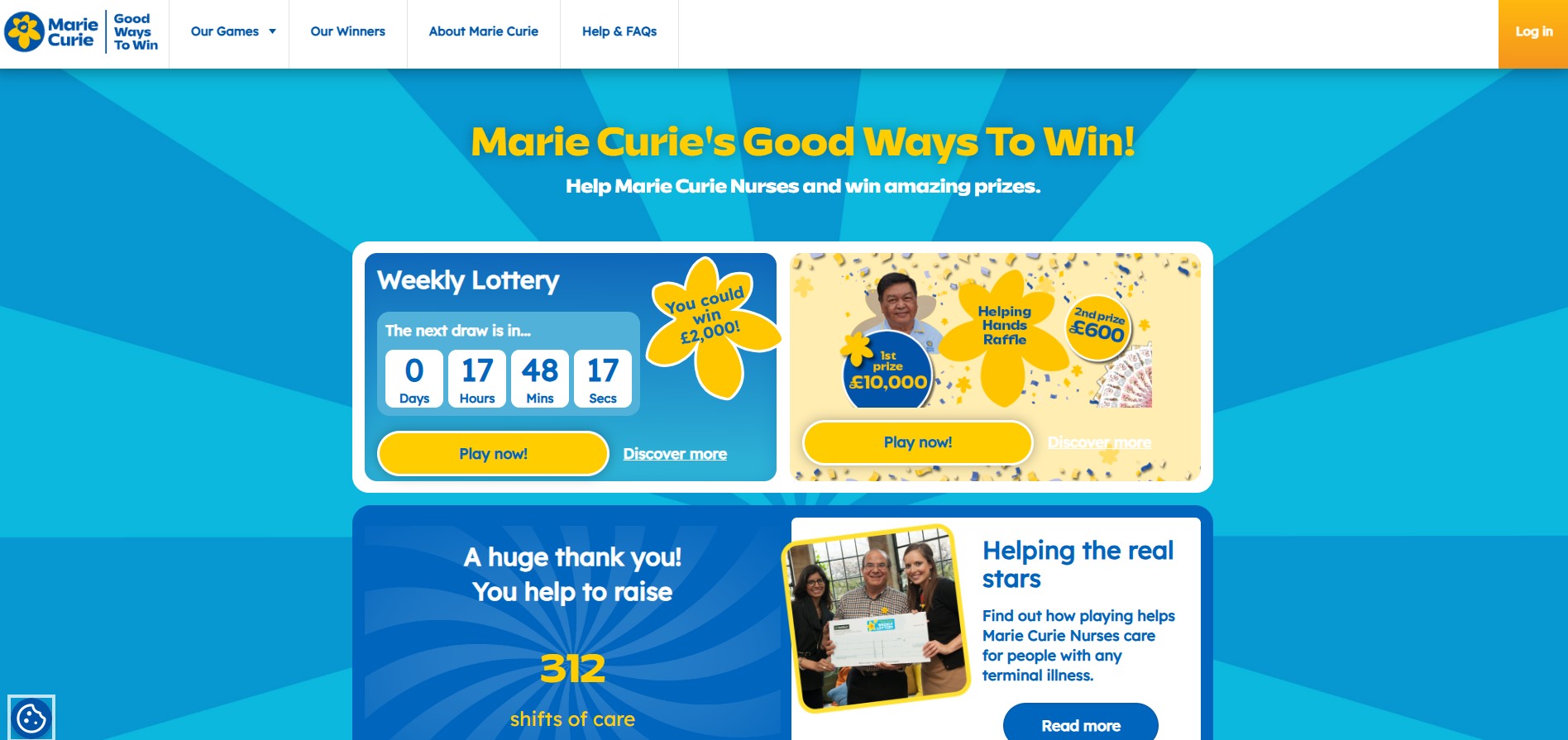
Marie Curie’s Good Ways To Win has become one of the most recognisable charity lottery programmes in the United Kingdom, offering supporters a simple way to help fund vital end-of-life care while enjoying the excitement of prize draws. Every ticket purchased contributes towards the work of Marie Curie Nurses, helping individuals and families facing terminal illness receive the care, dignity, and support they need during some of life’s most difficult moments.
For many participants, Good Ways To Win is about far more than the possibility of winning prizes. It is an opportunity to make a meaningful contribution to a cause that touches millions of families across the UK. Whether people have experienced the support of Marie Curie directly or simply recognise the importance of compassionate end-of-life care, the lottery provides a practical and affordable way to help.
Marie Curie has spent decades supporting people living with terminal illnesses and their families. The charity’s mission centres on ensuring that everyone has access to the best possible care at the end of life, regardless of their illness, circumstances, or location. Through its nurses, hospices, support services, and information programmes, Marie Curie helps people navigate one of the most challenging experiences anyone can face.
The Good Ways To Win lottery plays an important role in funding this work. Every entry contributes towards providing nursing shifts, specialist care, emotional support, practical assistance, and guidance for families coping with terminal illness. While players enjoy the anticipation of regular prize draws, they also become part of a wider community helping to make a genuine difference in people’s lives.
One of the most powerful aspects of the programme is its direct connection to frontline care. Marie Curie often highlights how lottery participation helps fund nursing shifts, providing supporters with a tangible understanding of the impact their contributions make. Rather than simply donating to a general fund, players can see a clear link between participation and the care delivered by Marie Curie Nurses.
Marie Curie Nurses provide expert care and support to people living with terminal illnesses in their own homes and in healthcare settings. Their work helps patients remain comfortable, maintain dignity, and spend precious time with loved ones. For many families, the presence of a Marie Curie Nurse provides reassurance, guidance, and practical support during an incredibly difficult period.
Terminal illness affects not only patients but also those closest to them. Family members often face emotional strain, practical challenges, financial concerns, and the demands of caregiving. Marie Curie’s services help support the wider family network, recognising that end-of-life care extends beyond medical treatment alone.
The lottery itself has been designed to be straightforward and accessible. Supporters can join quickly and easily, becoming eligible for regular prize draws while contributing to the charity’s mission. This simplicity has helped make Good Ways To Win popular among people who want a regular and convenient way to support the charity.
Charity lotteries have grown significantly in popularity across the UK because they combine fundraising with entertainment. Unlike traditional donations, lotteries provide participants with the chance to win prizes while supporting causes they care about. This dual benefit has proven attractive to supporters who appreciate receiving something in return while knowing their money is helping others.
Marie Curie’s Good Ways To Win embodies this approach. Participants know that even if they do not win a prize, their contributions still help fund vital care services. This means every entry has value regardless of the outcome of the draw.
The charity’s work extends far beyond nursing care alone. Marie Curie also operates hospices, provides information and support services, campaigns for improvements in end-of-life care, and funds research aimed at improving experiences for people living with terminal illness. The breadth of these services highlights the scale of the charity’s commitment to supporting individuals and families during difficult times.
Many supporters are motivated by personal experiences. Terminal illness affects people from all walks of life, and countless families have witnessed first-hand the difference compassionate care can make. For some, joining the lottery becomes a way of expressing gratitude for support received. For others, it represents a commitment to helping future patients and families access the same level of care.
The emotional connection many players feel towards Marie Curie distinguishes the lottery from purely commercial gaming products. While the possibility of winning prizes remains appealing, the charitable purpose often provides the strongest motivation for participation. Supporters understand that their contributions help fund real services delivered by real healthcare professionals caring for people in need.
Another reason the programme continues to attract support is transparency. Marie Curie regularly communicates how fundraising income contributes to its services and the difference supporters make. By demonstrating the impact of lottery participation, the charity helps players understand the value of their contributions.
The healthcare landscape continues to evolve, and demand for end-of-life care services remains significant. As populations age and medical advances allow people to live longer with complex conditions, the need for specialist palliative care continues to grow. Organisations such as Marie Curie play a crucial role in helping healthcare systems meet this demand.
Fundraising initiatives such as Good Ways To Win provide an important source of sustainable income. Unlike one-off fundraising events, lottery programmes generate recurring support that helps charities plan ahead and maintain essential services. This stability is particularly valuable for healthcare-related charities whose services often require long-term investment and staffing commitments.
Technology has also helped expand access to charity lotteries. Online registration, secure payment systems, digital communications, and electronic winner notifications make participation easier than ever. Supporters can join from anywhere in Great Britain and remain connected to the charity’s work through updates, stories, and news.
Responsible gambling remains a core part of the programme’s operation. Marie Curie promotes responsible play and provides access to information and support services for anyone concerned about gambling-related issues. The charity recognises the importance of ensuring that participation remains enjoyable, affordable, and appropriately managed.
This commitment to responsible gambling reflects wider standards across the regulated charity lottery sector. Players are encouraged to participate for enjoyment and charitable support rather than viewing lotteries as a source of income. Maintaining this balance helps protect participants while preserving the fundraising benefits generated through lottery activity.
The success of Good Ways To Win demonstrates the power of collective support. Individual contributions may appear modest, but when combined across thousands of players they generate substantial funding that enables Marie Curie to continue delivering care throughout the country. Every ticket contributes towards helping patients receive compassionate support and helping families navigate challenging circumstances.
The charity’s work is built on compassion, dignity, and the belief that everyone deserves the best possible care at the end of life. Through Good Ways To Win, supporters help transform these values into practical action. Every draw helps fund nursing shifts, support services, and programmes that improve quality of life for people living with terminal illness.
Many participants appreciate that the lottery allows them to support a cause in a simple and sustainable way. Rather than making occasional donations, they can contribute regularly while enjoying the added excitement of prize draws. This creates a long-term relationship between supporters and the charity, strengthening fundraising efforts and helping secure the future of essential services.
As awareness of palliative care and end-of-life support continues to grow, charities such as Marie Curie remain indispensable. Their work complements healthcare services, fills critical gaps in support, and ensures that patients and families receive care that extends beyond clinical treatment alone.
Good Ways To Win provides a practical way for members of the public to become part of this mission. Every ticket purchased helps fund compassionate care, supports skilled healthcare professionals, and contributes towards a future where everyone affected by terminal illness receives the support they deserve.
For supporters looking to combine charitable giving with the excitement of prize draws, Marie Curie’s Good Ways To Win offers an appealing solution. It is a programme built on the simple idea that small individual contributions can collectively create a profound impact. Through the continued support of players across Great Britain, Marie Curie can continue providing care, comfort, and dignity to those who need it most.
Ultimately, the true value of Good Ways To Win extends beyond prizes and jackpots. It lies in the thousands of nursing shifts funded, the families supported, the patients cared for, and the moments of comfort provided during difficult times. Every ticket purchased helps ensure that Marie Curie can continue its vital work, offering compassion and support when it matters most.
FAQ: Marie Curie Good Ways To Win – 100 Frequently Asked Questions and Answers
1. What is Marie Curie Good Ways To Win?
Marie Curie Good Ways To Win is the charity’s lottery programme that raises funds for end-of-life care services while offering players the chance to win prizes.
2. Who operates Good Ways To Win?
The lottery is operated on behalf of Marie Curie.
3. What is Marie Curie?
Marie Curie is a UK charity that provides care and support to people living with terminal illnesses and their families.
4. How does Good Ways To Win work?
Players purchase entries and are entered into regular prize draws while helping fund Marie Curie’s services.
5. Who can play the lottery?
Players must meet the eligibility requirements outlined in the lottery’s terms and conditions.
6. Do I need to be over 18?
Yes, participants must be at least 18 years old.
7. Is the lottery legal?
Yes, it is licensed and regulated in Great Britain.
8. Who regulates the lottery?
The Gambling Commission regulates Marie Curie’s lottery activities.
9. Why does Marie Curie run a lottery?
The lottery helps raise funds for the charity’s nursing and support services.
10. What happens to the money raised?
Funds help support Marie Curie Nurses and other charitable services.
11. Can I win prizes?
Yes, players are entered into prize draws and can win prizes.
12. How often are draws held?
Draw schedules are determined by the lottery’s current rules.
13. Can I play online?
Yes, eligible players can usually join online.
14. Is joining easy?
Yes, registration is designed to be straightforward and accessible.
15. How does my participation help?
Every entry helps fund care and support for people living with terminal illnesses.
16. What are Marie Curie Nurses?
They are specialist nurses who provide expert end-of-life care and support.
17. Who receives Marie Curie care?
People living with terminal illnesses and their families.
18. Does Marie Curie only help cancer patients?
No, Marie Curie supports people with any terminal illness.
19. Why is end-of-life care important?
It helps ensure people receive comfort, dignity, and support during difficult times.
20. What services does Marie Curie provide?
Nursing care, hospice care, support services, information, and practical assistance.
21. Does Marie Curie operate hospices?
Yes, the charity operates several hospices across the UK.
22. How do nurses help patients?
They provide clinical care, symptom management, and emotional support.
23. How do nurses help families?
They provide guidance, reassurance, and practical support.
24. What is palliative care?
Care focused on improving quality of life for people with serious illnesses.
25. Does lottery funding support palliative care?
Yes, lottery proceeds help support palliative and end-of-life care services.
26. Can small contributions really help?
Yes, many small contributions collectively make a significant impact.
27. How many nursing shifts are funded through fundraising?
Thousands of nursing shifts are supported through fundraising activities each year.
28. Why do people join Good Ways To Win?
Many want to support Marie Curie’s work while having the chance to win prizes.
29. Is winning guaranteed?
No, all prizes are awarded by chance.
30. Can I play regularly?
Yes, many players choose regular participation.
31. Can I cancel my participation?
Yes, cancellation options are available according to the lottery’s terms.
32. What if I move house?
You should update your contact details.
33. Can I change my payment details?
Yes, payment information can normally be updated.
34. What happens if my payment fails?
You may be contacted to update your details.
35. Are my personal details secure?
Yes, data protection laws and privacy policies apply.
36. How are winners chosen?
Winners are selected through regulated draw procedures.
37. Are draws fair?
Yes, lottery draws operate under regulatory oversight.
38. How do I know if I have won?
Winners are usually contacted and results may be published.
39. Can I check results online?
Yes, results are generally available through official channels.
40. Are winnings taxable?
Lottery winnings are generally tax-free in the UK.
41. How are prizes paid?
Prize payment procedures depend on the lottery’s rules.
42. Can I remain anonymous if I win?
Privacy arrangements depend on the lottery’s policies.
43. What happens to unclaimed prizes?
Unclaimed prizes are handled according to the official terms and conditions.
44. Does Marie Curie provide support nationwide?
Yes, services are available across the UK.
45. How long has Marie Curie existed?
Marie Curie has been supporting people for many decades.
46. Is Marie Curie a registered charity?
Yes, Marie Curie is a registered charity.
47. Does the charity employ healthcare professionals?
Yes, nurses and healthcare professionals play a key role.
48. Does Marie Curie use volunteers?
Yes, volunteers support many aspects of the charity’s work.
49. Can lottery proceeds support volunteers?
Funding helps support the charity’s wider activities and infrastructure.
50. Does Marie Curie offer bereavement support?
Yes, support is available for families and loved ones.
51. What is terminal illness?
An illness that cannot be cured and is expected to limit life expectancy.
52. Why is specialist care important?
It helps improve comfort and quality of life.
53. Does Marie Curie provide information services?
Yes, information and guidance are available.
54. Can carers receive support?
Yes, carers can access information and support resources.
55. What is hospice care?
Specialist care focused on comfort and quality of life.
56. Does Marie Curie provide hospice care?
Yes, hospice services are part of its work.
57. How does fundraising support hospices?
Funds help maintain services, staff, and facilities.
58. Can anyone donate without playing?
Yes, donations can be made directly to Marie Curie.
59. What makes charity lotteries different?
They combine fundraising with prize opportunities.
60. Why are charity lotteries popular?
They allow people to support causes while enjoying the chance to win.
61. Is Good Ways To Win suitable for long-term supporters?
Yes, many participants support the charity for years.
62. What motivates many players?
A desire to help others while participating in prize draws.
63. Can I play from outside Great Britain?
Eligibility rules apply and should be checked in the terms and conditions.
64. What is responsible gambling?
Participating within your means for entertainment purposes.
65. Does Marie Curie promote responsible gambling?
Yes, responsible gambling information is provided.
66. Where can I find gambling support?
Support is available through organisations such as GambleAware.
67. Can I self-exclude?
Yes, self-exclusion options are typically available.
68. What is self-exclusion?
A process that prevents participation in gambling activities.
69. Can I pause my participation?
This depends on the lottery’s policies and procedures.
70. How are lottery funds managed?
Funds are allocated according to charity and operational requirements.
71. Does Marie Curie publish financial information?
Yes, charities generally publish annual reports and accounts.
72. What impact does fundraising have?
It helps sustain essential services and care programmes.
73. Does Marie Curie support research?
The charity contributes to improving end-of-life care and support.
74. How many families benefit from Marie Curie services?
Thousands of families receive support each year.
75. Can younger adults receive support?
Yes, support is based on need rather than age alone.
76. Does Marie Curie support older adults?
Yes, many services support older people living with terminal illness.
77. Why is dignity important in care?
Dignity helps ensure individuals are treated with respect and compassion.
78. What is quality-of-life care?
Care focused on comfort, wellbeing, and personal choice.
79. Does Marie Curie support care at home?
Yes, many nursing services are delivered in people’s homes.
80. Why do many patients prefer home care?
It allows them to remain in familiar surroundings.
81. Can families receive practical advice?
Yes, information and guidance are available.
82. Does Marie Curie help during emergencies?
Support services are available for many urgent care situations.
83. What role do nurses play in symptom management?
They help patients remain as comfortable as possible.
84. How does Marie Curie support communities?
Through care services, education, and support programmes.
85. Why is community fundraising important?
It provides essential funding for charitable work.
86. Can lottery participation improve lives?
Yes, fundraising supports services that help people every day.
87. What is the biggest benefit of Good Ways To Win?
Supporting Marie Curie’s care services while entering prize draws.
88. Can winners share their stories?
Some winners choose to share their experiences publicly.
89. Why do supporters remain loyal to Marie Curie?
Many appreciate the charity’s compassionate work and impact.
90. Does the charity support people regardless of illness type?
Yes, support is available for people with any terminal illness.
91. Can family members seek advice from Marie Curie?
Yes, information and guidance are available to families.
92. What is compassionate care?
Care delivered with empathy, kindness, and understanding.
93. Why is compassionate care valuable?
It improves experiences for patients and families.
94. Does Marie Curie work alongside the NHS?
Yes, services often complement NHS care.
95. Can fundraising help improve care standards?
Funding helps maintain and expand high-quality services.
96. Is Good Ways To Win an investment?
No, it should be viewed as entertainment and charitable support.
97. Are prizes the main reason people join?
Many participants say supporting the charity is their primary motivation.
98. Can regular players make a difference?
Yes, ongoing support helps create sustainable funding.
99. What is Marie Curie’s overall mission?
To ensure everyone receives the care and support they need at the end of life.
100. Why should someone consider joining Marie Curie Good Ways To Win?
It provides a simple way to support compassionate end-of-life care while enjoying the excitement of regular prize draws.